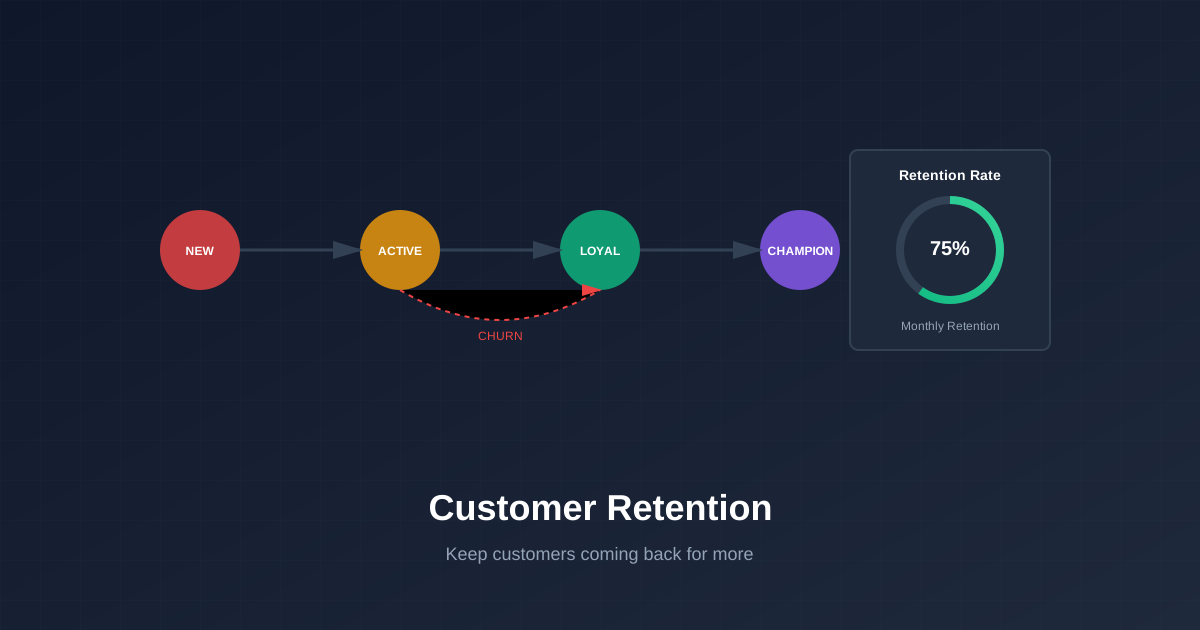
Acquiring a new customer costs 5–7x more than retaining an existing one. Yet most ecommerce teams spend 80% of their budget on acquisition and almost nothing on retention.
The data to fix this is already in your store. You just need to know where to look.
1. Identify Your Churn Window
Every store has a critical window — the period after a first purchase where customers either come back or disappear forever.
To find yours, ask:
"What is the average number of days between a customer's first and second order?"
For most stores, this window is 30–60 days. If a customer hasn't returned within that window, they're at high risk of churning.
Action: Set up automated email sequences that trigger at 50%, 75%, and 100% of your churn window.
2. Segment by Purchase Frequency
Not all customers need the same retention strategy. Segment them into groups:
| Segment | Definition | Strategy |
|---|---|---|
| One-time buyers | 1 order only | Win-back campaigns |
| Occasional | 2–3 orders | Loyalty incentives |
| Regular | 4–6 orders | VIP perks |
| Champions | 7+ orders | Referral programs |
"Show me the distribution of customers by number of orders"
Smart Query can generate this segmentation instantly from your order data.
3. Track Cohort Retention Rates
Cohort analysis groups customers by when they first purchased, then tracks what percentage return in each subsequent month.
This reveals whether your retention is improving or declining over time — something aggregate metrics completely hide.
"Show me monthly cohort retention rates for the past 6 months"
If you see retention rates dropping for newer cohorts, something changed — a product quality issue, shipping delays, or competitive pressure.
4. Find Your "Sticky" Products
Some products naturally lead to repeat purchases. Others are one-and-done. Finding your sticky products helps you focus marketing on items that drive long-term value.
"Which products have the highest repeat purchase rate?"
Products with high repeat rates should be featured in:
- Welcome email sequences
- First-time buyer promotions
- Cross-sell recommendations
5. Monitor Customer Lifetime Value Trends
CLV isn't just a number — it's a trend. Track average CLV by acquisition month to see if the customers you're acquiring are getting more or less valuable over time.
"What is the average customer lifetime value by acquisition month?"
If CLV is declining while acquisition costs stay flat, you're heading toward an unsustainable business model.
Start With Your Data
Every strategy above starts with a question. Smart Query lets you ask these questions in plain English and get instant answers — no SQL, no spreadsheets, no waiting for someone else to pull a report.
The insights are already in your data. You just need to ask.