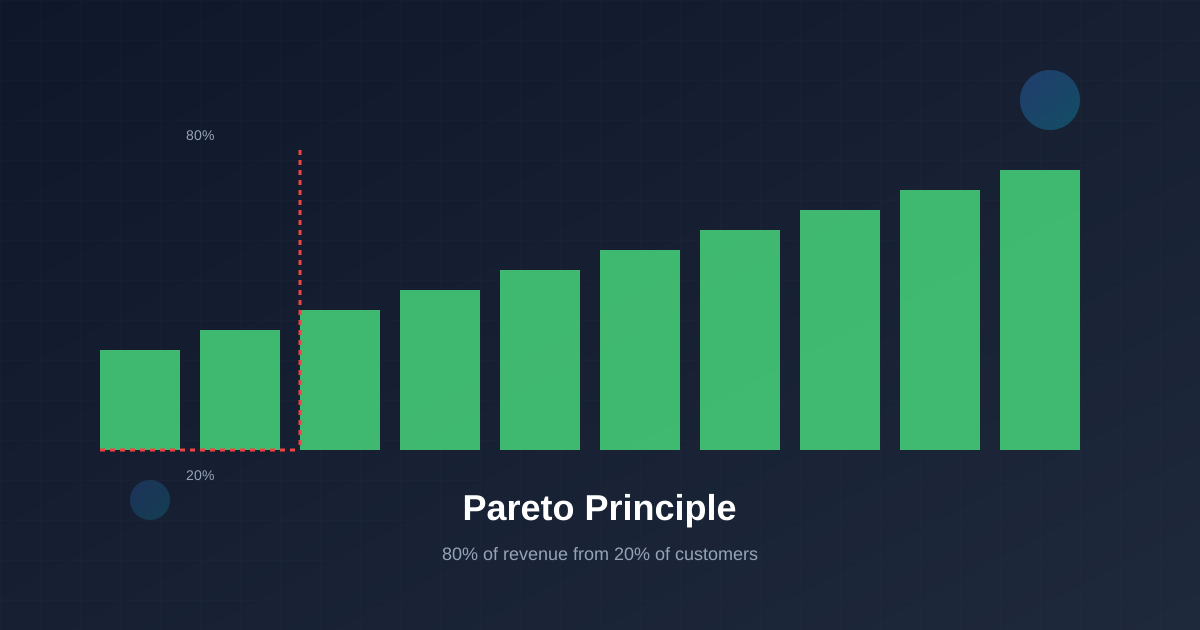
Most ecommerce businesses follow a predictable pattern: a small percentage of customers generate the majority of revenue. This is known as the Pareto Principle — the idea that roughly 80% of outcomes come from 20% of inputs.
But how do you actually measure this for your store?
Why Revenue Concentration Matters
Understanding your revenue concentration helps you:
- Prioritize retention over acquisition for high-value segments
- Allocate marketing spend more efficiently
- Build loyalty programs that actually move the needle
- Forecast revenue more accurately
How to Calculate Revenue Concentration
The simplest approach is to rank all customers by total spend, then calculate cumulative revenue percentages.
Here's the SQL query you'd run:
WITH customer_revenue AS (
  SELECT
    customer_id,
    SUM(total_amount) AS lifetime_value
  FROM orders
  GROUP BY customer_id
),
ranked AS (
  SELECT
    customer_id,
    lifetime_value,
    NTILE(10) OVER (ORDER BY lifetime_value DESC) AS decile
  FROM customer_revenue
)
SELECT
  decile,
  COUNT(*) AS customer_count,
  SUM(lifetime_value) AS total_revenue,
  ROUND(SUM(lifetime_value) * 100.0 / (SELECT SUM(lifetime_value) FROM customer_revenue), 1) AS revenue_pct
FROM ranked
GROUP BY decile
ORDER BY decile;
With Smart Query, you don't need to write this SQL yourself. Just ask:
"What percentage of revenue comes from my top 20% of customers?"
Smart Query generates the query, runs it, and shows you a chart instantly.
What Good Looks Like
| Revenue Concentration | Health |
|---|---|
| Top 20% = 50–60% of revenue | Healthy, diversified |
| Top 20% = 70–80% of revenue | Moderate concentration |
| Top 20% = 80%+ of revenue | High risk — heavy dependency |
If your top 20% drives more than 80% of revenue, it's time to invest in broadening your customer base while retaining your best buyers.
Actionable Next Steps
- Segment your email list by lifetime value decile
- Create VIP offers for your top 10% customers
- Analyze churn risk among high-value customers
- Test winback campaigns for lapsed high-value buyers
Revenue concentration isn't just a metric — it's a lens for every growth decision you make.